Plantain: Identification, Foraging and First-Aid Uses
A practical guide to broadleaf and ribwort plantain: how to identify both, where to forage them in the UK,...

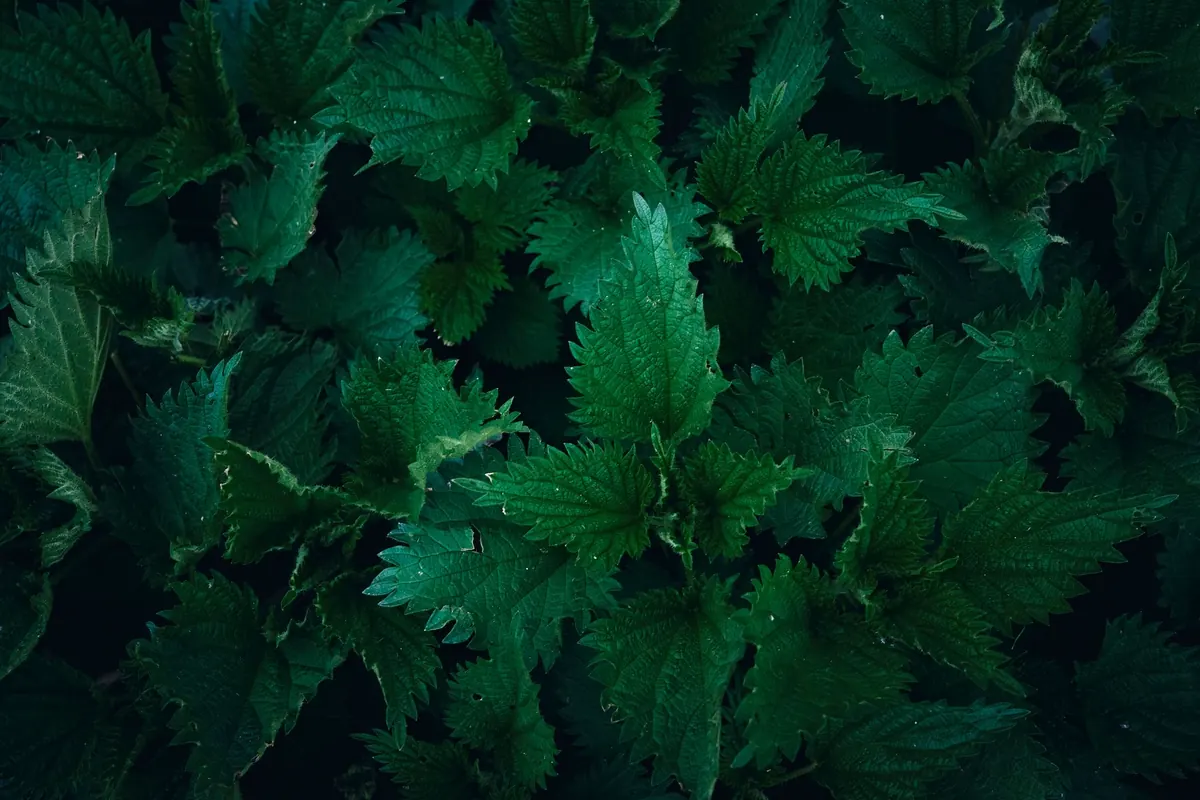
Stinging nettle is the first plant most of us learn to recognise, usually with the back of a hand. It is also one of the most generous plants in the British hedgerow: free spring greens, a mineral-rich tea, a long-standing remedy for stiff joints and a liquid feed that will perk up your tomatoes. The sting is the only real obstacle, and gloves solve most of that.
Stinging nettle (Urtica dioica) is a hardy perennial. It dies back to yellow underground rhizomes each winter and shoots again from early spring, forming dense, waist-high patches in hedge bottoms, field edges and neglected corners of the garden.
Look for these features together:
The annual nettle, Urtica urens, is smaller — usually under 60cm — bushier and stings harder. It turns up in vegetable beds and bare soil, and vanishes with the frost. Use it in exactly the same ways.
Dead-nettles (Lamium species) are the classic confusion. White dead-nettle has similar opposite, toothed leaves but no sting, and carries white flowers in whorls around the stem; red dead-nettle and henbit are close relatives with pink or purple flowers. All are harmless, but they are no substitute in a nettle recipe — they lack both the flavour and the sting.
The sting itself is a useful confirmation that you have the right plant, since nothing else common in Britain does this to bare skin. Treat it as a check rather than your first test, though. Learn the leaf arrangement so you can identify nettle before you touch it.
From March to early June, nettles are at their best: tender, sweet and mild. Once they flower, usually from June onwards, the leaves turn coarse and develop gritty crystals of calcium carbonate in their tissues. Traditional herbal practice advises leaving nettles for eating and medicine once they are in flower or seeding. If you cut a patch back in midsummer, fresh tops will regrow, and some foragers take a second harvest from these, though the flavour never quite matches the spring crop.
There is no need to uproot anything. In the UK, picking leaves and flowers of common wild plants for personal use is generally allowed, but digging up plants without the landowner's permission is not, and commercial foraging needs consent. Take from large patches and never strip one stand bare.
Young nettle tastes green, mineral and faintly spinach-like, with a cucumber note. The sting disappears as soon as the leaves meet heat or are thoroughly crushed, so cooking, blanching for a minute or blitzing into soup all do the job. Do not eat them raw.
Nettle soup is the standard introduction: soften an onion and a potato in butter, add a litre of stock, simmer until the potato is soft, then pile in a colander of washed nettle tops. Cook for two or three minutes, blend, and season well — nettle likes nutmeg and black pepper.
Other uses worth trying:
A glut has one more use. Pack chopped nettles into a bucket, cover with water and leave for two or three weeks somewhere you do not mind the smell, then dilute one part to ten and water your tomatoes and courgettes. It is a good free feed, and the smell does fade.
Nettle appears in European herbals going back centuries, used as a spring tonic, a diuretic and a treatment for stiff, aching joints. In modern Western herbal practice the leaf is most often taken as a tea and reached for during hay fever season, while nettle root is prepared separately, in tinctures and decoctions, and treated as a different medicine altogether.
Use one to two teaspoons of dried leaf per mug, pour on freshly boiled water, cover and steep for five to ten minutes. Fresh leaf works too — use roughly three times as much and steep for less time. It is mildly diuretic, so it is not the tea to drink by the pint in the evening.
Nettle is a source of vitamin K, which plays a part in blood clotting. If you take warfarin or another anticoagulant, or you take diuretics or blood-pressure medication, speak to your GP or pharmacist before drinking nettle tea regularly. The same applies if you are pregnant, breastfeeding or taking any prescription medicine. If your symptoms are persistent rather than seasonal, have them looked at properly rather than self-treating.
Dried nettle is the most useful form to keep. Hang small bunches in paper bags in a warm, airy, dark place for a week or two, then strip the leaves and store them in an airtight jar away from light. A dehydrator on a low setting is quicker and keeps more colour. Dried leaf holds its flavour for about a year; after that it is not harmful, just dull.
For the freezer, blanch the tops for a minute, cool them in cold water, squeeze into balls and freeze. They drop straight into soups and stews. Nettle pesto also freezes well in ice-cube
Photo: Wyxina Tresse / Pexels
A practical guide to broadleaf and ribwort plantain: how to identify both, where to forage them in the UK,...
Cold water draws out the delicate aromatics and soothing gels that heat destroys. Here is how to make a...
A month-by-month guide to UK foraging, from March nettles to winter jelly ear, with practical picking...