How to Make a Cold Infusion (Cold Maceration) for Delicate Herbs
Cold water draws out the delicate aromatics and soothing gels that heat destroys. Here is how to make a...

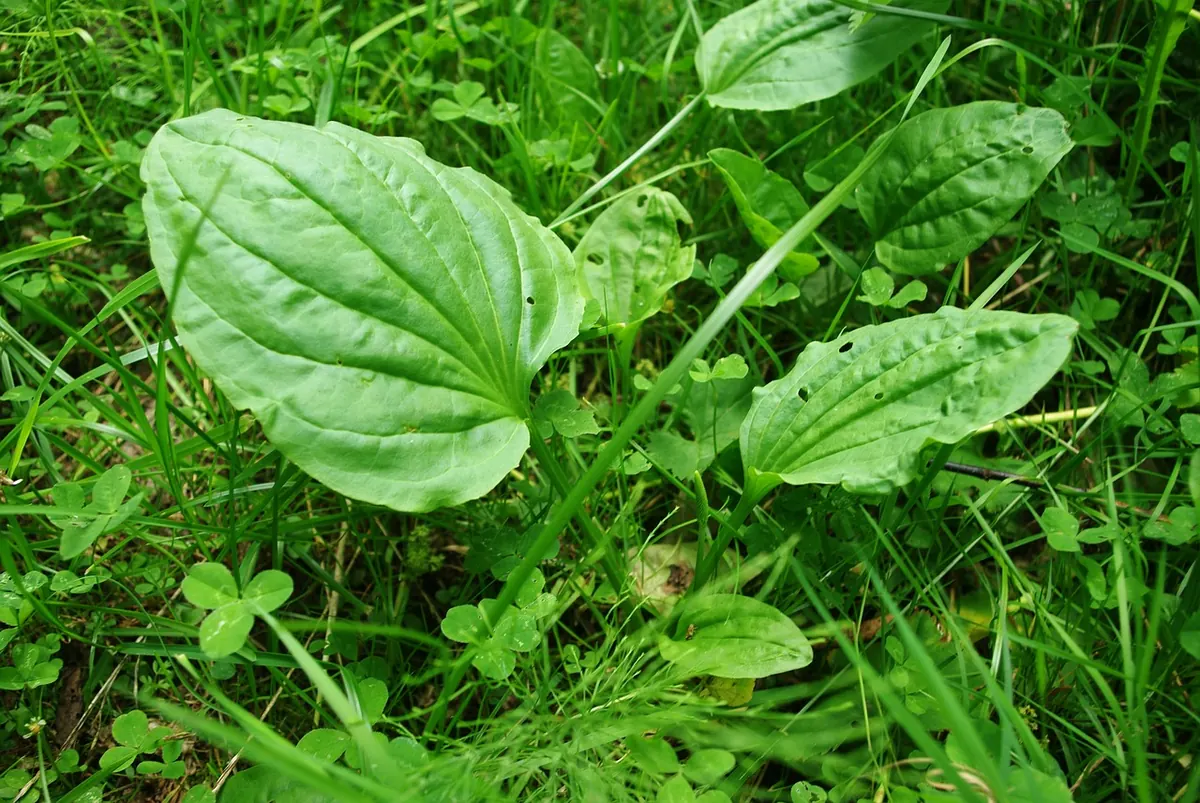
Most people have trodden on plantain a thousand times without once looking down. It grows in lawns, between paving slabs, along footpaths and in the worn patch by the back gate, and it has been a field medicine in Britain for centuries — a leaf for a nettle sting, a chewed poultice for a splinter. Two species are worth knowing well: broadleaf plantain and ribwort plantain. Both are common, both are useful, and neither is easy to confuse with anything harmful.
Both belong to the genus Plantago, and both share the same giveaway structure: every leaf rises from the base of the plant in a rosette, with no leaves on the flowering stem at all. The veins run lengthwise down the leaf rather than branching out from a central midrib, which gives them their corrugated, ribbed look. The flowers sit in small greenish spikes rather than anything showy.
One confusion worth clearing up early: the herb plantain has nothing to do with the cooking plantain, which is a kind of banana. They simply share a name. The leaves here taste mild and green, with a faint bitterness and a slightly slippery texture when chewed.
Broadleaf, or greater plantain, is the one under your feet. Its leaves are broad ovals, roughly palm-sized on a well-grown plant, with strong parallel ribs and edges that are usually smooth or faintly wavy. The flowering spike is a narrow green spike — the classic "rat's tail" — that starts tight and opens as the tiny seeds ripen.
Look for it in compacted, trodden ground: gateway entrances, lawn edges, cracks in paving, the strip beside a fence where nothing else grows. It is a plant that thrives on being walked over.
A handy confirmation test: tear a leaf across, and it pulls apart in stringy strands along the veins instead of giving a clean edge. The leaf stalk is also channelled, like a shallow gutter. A third species, hoary plantain, turns up in drier grassland with a shorter, paler spike and softly downy leaves — harmless, but less useful in the hand.
Ribwort is the meadow one, and once you can see it you will spot it everywhere. The leaves are narrow and lance-shaped, three to five times longer than they are wide, deeply ribbed and often lightly hairy, with a paler underside. The veins run the full length of the leaf from base to tip.
The flower stems are the real signature: long, wiry and silvery-green, deeply furrowed, topped by a short oval spike. In summer you get a ring of cream anthers sticking out around the spike like a small halo. Those stems are tough — you can bend one double without snapping it, unlike the softer stems of most lawn weeds.
Ribwort tolerates mowing, grazing and drier ground better than broadleaf, so expect it in verges, hay meadows, lawns and field edges. Where the two grow together, the difference is obvious: one broad and squat, one tall and narrow.
The young leaves are the ones you want, from spring through to early summer. Once the plants have set seed, the leaves turn tough and stringy, which makes them unpleasant to chew and awkward in a poultice.
Use fresh leaves the same day, or dry them in a warm, airy room and crumble them into a labelled jar. Dried plantain keeps its colour and body for roughly a year. It is generally acceptable to pick a small amount of foliage for personal use, but uprooting plants or foraging on private land without permission is not.
This is where plantain earns its place. The leaves are mildly astringent and notably soothing on skin, which is why they have been reached for during walks and gardening sessions for generations.
It is most often used on nettle stings, midge and insect bites, small grazes and minor scratches. A drawing poultice for splinters and boils is a long-standing folk use rather than a proven one, so treat it as comfort, not cure.
Pour just-boiled water over two or three fresh leaves or a teaspoon of dried ones, cover the mug and steep for ten minutes. Strain before drinking. Traditionally it is sipped for tickly coughs and irritated throats, gargled for a sore mouth, and used cooled as a wash for minor skin irritation. The taste is mild, green and faintly bitter — a spoonful of honey helps.
Only ever use a plant you have identified yourself, with certainty, from the plant in front of you. Check where you are picking, and never take from ground that may have been sprayed or fouled. Test a small patch on your skin before covering a larger area; reactions to any plant are possible, and the fine hairs on ribwort irritate some people.
Plantain is suited to clean, minor grazes, stings and bites. It is not for deep or puncture wounds, burns, infected skin, or anything that would normally send you to a doctor. If you are pregnant or breastfeeding, taking regular medication, or treating a child, ask a pharmacist or GP before taking it internally. And if a sting or bite spreads, swells markedly, or leaves you feeling unwell, seek medical help — a leaf is no substitute for proper care.
Next time you get stung, find a plantain leaf — broadleaf on the path, ribwort in the meadow — and check that the ribs run the whole length of the leaf before you pick it. Rinse it, crush it, hold it on the sting. That is the entire method, and it takes thirty seconds.
Then build the habit slowly. Learn the plant properly in summer while it is flowering, when the two species are unmistakable. Dry a small jar of leaves for winter tea, and keep a few fresh ones for garden grazes. Free, plentiful and growing within a few steps of most front doors, plantain is the easiest first plant for any home herbal kit.
Photo: Romaboy / Pixabay
Cold water draws out the delicate aromatics and soothing gels that heat destroys. Here is how to make a...
A month-by-month guide to UK foraging, from March nettles to winter jelly ear, with practical picking...
Fresh and dried herbs behave differently in tea, tinctures and oils. Compare potency, preparation, storage...