Plantain: Identification, Foraging and First-Aid Uses
A practical guide to broadleaf and ribwort plantain: how to identify both, where to forage them in the UK,...

March arrives and the first thing worth eating is a nettle top; by August you are coming home with stained fingers and far too many blackberries. Foraging in Britain runs on a slow, generous clock, and the trick is to learn it season by season rather than trying to memorise everything at once.
What follows is a working calendar, not a rulebook. Weather shifts things by two or three weeks — a cold spring holds wild garlic back, a warm September ripens the sloes early. Trust what you actually see in the hedge rather than the date on your phone.
One thing before you set off: never pick anything you cannot identify with complete certainty, and leave a site looking as though you were never there.
March. Nettles come first. Take the top two or three pairs of leaves before the plants flower, wear gloves, and cook them. Chickweed, hairy bittercress and common sorrel are up too, and dandelion leaves are at their least bitter. Wild garlic pushes through in sheltered woods, often weeks later in Scotland than in Devon. Three-cornered leek is already up in the milder south, and gorse flowers smell faintly of coconut — but leave primroses and violets where they are.
April. Wild garlic peaks, and you can smell a wood before you see it. Take a leaf or two from each clump and leave the bulbs underground. Alexanders is at its best along the coast; cook it thoroughly and be certain of your identification, because carrot-family lookalikes are the ones that cause real harm. Hawthorn leaves, known to generations of children as bread and cheese, are tender enough to eat straight from the hedge.
May. Elderflowers open in the second half of the month, most often on the sunny side of a hedge. Pick the heads on a dry morning when the flowers are fully open, and leave any with brown-spotted florets — they smell sour and taste worse. Wild rocket, Jack-by-the-hedge and young beech leaves are all in play.
June and July are when hedgerows stop being stingy. Lime flowers, meadowsweet and yarrow are out, wild strawberries and raspberries appear on woodland edges, and wild marjoram, thyme and fennel grow on dry, sunny ground. Pick the herbs in the morning and dry them in paper bags for winter.
This is coastal season as well. Marsh samphire, sea beet and sea purslane are at their best — young sea beet, cooked like spinach, is one of the most underrated wild greens we have. Snip samphire above the base with scissors rather than pulling it up, and never strip a whole channel.
Bilberries ripen on the heaths through July, small and dark and about four times the effort of shop-bought blueberries. Expect purple hands and a stiff back.
Blackberries run from late July into September. Pick above knee height, away from busy roads, and freeze them flat on trays the same day. Elderberries follow in late August and must be cooked — raw berries and stalks can cause nausea.
Then come rowan berries, hawthorn haws, the first wild plums and damsons, and hazelnuts, ready as the husks turn yellow and always a race with the squirrels. Rosehips are worth gathering for syrup, though the fine hairs inside irritate the throat, so strain everything carefully.
October and November are for the slow, heavy work. Sweet chestnuts, walnuts and beech mast; crab apples for jelly; medlars, which need bletting — left until they soften almost to brown — before they are worth eating; sloes, improved by a frost or a night in the freezer.
Roots come into their own now. Burdock, dandelion and horseradish can be dug where the plants are genuinely abundant and you have permission, taking a side root rather than hauling the whole plant out.
Fungi. This is where caution matters most. Field mushrooms, chanterelles, winter chanterelles, wood blewits and puffballs are the familiar ones, and learning five properly beats learning twenty badly. A true field mushroom bruises cleanly; its cousin, the yellow-staining mushroom, turns bright yellow at the base and can upset your stomach. Never eat a fungus on the strength of a photograph or an app.
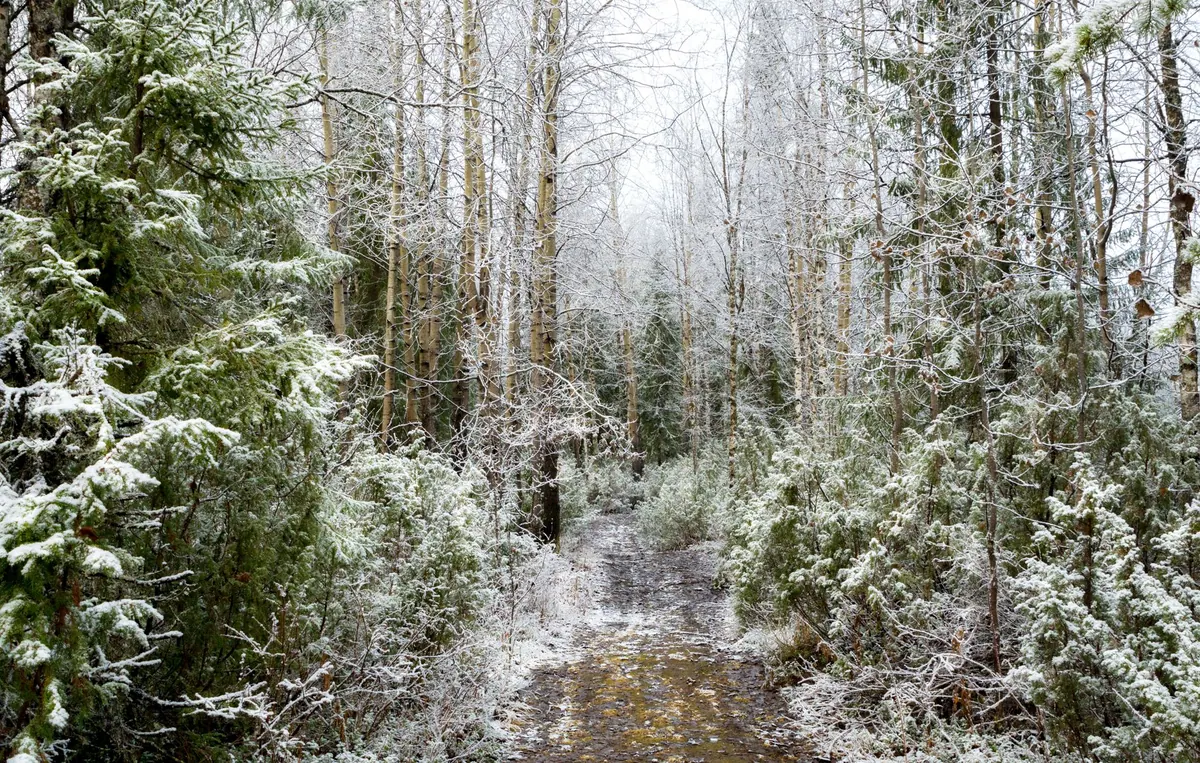
December to February is leaner, not empty. Pine, spruce and fir needles make a bright, resinous infusion, but you must be able to tell yew apart from them, because every part of yew is poisonous: its needles are flat and sit either side of the twig, with a red, fleshy cup around the seed. Skip pine infusions in pregnancy.
The cold months belong to a few fungi. Jelly ear grows on elder and is hard to mistake; scarlet elf cups brighten damp leaf litter from February. Velvet shank fruits on dead wood in winter — so does the funeral bell, and the two have poisoned people through confusion, so learn it only alongside someone who knows it well.
On the coast, sea beet and sea purslane keep going. Chickweed, wintercress and hairy bittercress grow quietly through mild spells, and in the mild south-west wild garlic leaves are often up by late January.
Rules differ across England, Wales, Scotland and Northern Ireland, and nature reserves, SSSIs and land managed by conservation charities usually have their own restrictions on top. Broadly, picking leaves, flowers, fruit and fungi by hand for personal use is usually acceptable where you have the landowner's permission; uprooting plants, digging roots and picking for sale are not, and some protected species may not be picked at all. If you are unsure, ask — or leave it.
If you cannot name it with certainty, leave it growing.
If you plan to use any wild plant medicinally, speak to a qualified herbalist, pharmacist or your GP first — particularly if you are pregnant, breastfeeding, taking medication or managing a health condition.
Choose three plants you can find near home and get to know them across a whole year: when they appear, when they flower, when they seed, and what they look like when young and half-hidden. Nettles, wild garlic, blackberries and elder are good first choices because they are abundant and their seasons are forgiving.
Keep a few notes — date, place, weather, what you picked, how you used it. Within two years you will have a personal calendar far more useful than any generic one, because it will be tuned to the soil, altitude and weather of your own patch. Then add a fourth plant, and a fifth.
Photo: Сергей Терентьев / Pexels
A practical guide to broadleaf and ribwort plantain: how to identify both, where to forage them in the UK,...
Cold water draws out the delicate aromatics and soothing gels that heat destroys. Here is how to make a...
Fresh and dried herbs behave differently in tea, tinctures and oils. Compare potency, preparation, storage...